
Daily Nutrition
Seven Supplements in a Men's Daily Routine: An Editorial Overview
Marcus Webb · 14 February 2026 · 10 min read

Creatine holds a singular position in the published nutritional supplement literature. No other compound in common use among active men has accumulated a comparable volume of independently conducted research across such a range of populations and activity contexts. An editorial account of what that research documents — and what it does not — is the purpose of this piece.
The published research base for creatine supplementation is extensive by any comparative measure. Thousands of independently conducted studies, published across peer-reviewed nutritional and sports science journals since the early 1990s, have examined creatine's characteristics in the context of physical performance, body composition, and daily supplementation routines. The resulting body of evidence is more consistently documented than that of any other performance-adjacent supplement in common use.
The mechanism at the centre of this research is creatine's role in the phosphocreatine energy system. Creatine, stored in muscle tissue as phosphocreatine, supports the rapid regeneration of adenosine triphosphate (ATP) — the primary energy currency of cellular work — during short-duration, high-intensity physical activity. Supplemental creatine has been shown across the published literature to increase the body's stored phosphocreatine levels, thereby supporting physical output over time in resistance training routines that rely on repeated high-intensity efforts.

Among the various forms of creatine supplement available commercially — creatine monohydrate, creatine ethyl ester, buffered creatine, creatine hydrochloride — the published research base is concentrated almost entirely on creatine monohydrate. This is not a coincidence; creatine monohydrate was the primary form used in the foundational studies of the 1990s and early 2000s, and it has remained the reference compound against which all subsequent formulations are assessed.
The practical implication for men structuring a daily supplement routine is consistent across editorial reviews of the literature: creatine monohydrate is the form with the most extensively documented characteristics and the most established record of consistent use across diverse populations. Alternative forms may present particular advantages in specific contexts, but the published evidence base supporting those advantages is substantially thinner than that supporting the reference compound.
The reported supplementation approach in the majority of long-term studies is a daily maintenance dose, typically taken consistently without a loading protocol in most contemporary study designs. Some earlier research employed a loading phase — a higher daily intake spread across multiple doses over a short initial period — before transitioning to a maintenance dose. Subsequent research has indicated that both approaches ultimately arrive at similar storage saturation levels; the loading approach reaches that level faster, while the consistent daily approach achieves the same outcome over a longer initial window.
"No other compound in common use among active men has accumulated a comparable volume of independently conducted research across such a range of populations and activity contexts."
An editorial reading of the creatine research literature reveals an important framing consideration: the majority of studies reporting the most pronounced effects document those effects in the context of resistance training and repeated high-intensity effort protocols. The research on creatine supplementation in the context of endurance activities — sustained aerobic output over longer durations — documents less consistent findings, which is mechanistically consistent with creatine's role in the phosphocreatine system rather than the aerobic energy pathways primarily engaged during endurance work.
For men whose primary physical activity is resistance training — gym-based work involving compound lifts, progressive loading, and repeated sets — the published research context is directly relevant. For men whose activity patterns are predominantly endurance-oriented, the research base is narrower and the documented effects are less uniform. An evidence-informed approach to supplement selection notes this distinction rather than presenting creatine as universally relevant regardless of activity context.
One of the more extensively discussed questions in the editorial literature on creatine supplementation is whether the timing of daily intake — pre-training, post-training, or at a fixed time unrelated to training — influences the magnitude of observed effects. The research on this question is not definitively resolved, but the weight of published evidence suggests that daily consistency is a more meaningful factor than precise timing relative to training sessions.
This finding has practical implications for how creatine integrates into a morning supplement stack. The convenience of a fixed daily slot — dissolved in water or a beverage alongside the morning routine — is consistent with the daily consistency emphasis in the published literature. Post-training timing may offer a marginal benefit according to some study designs, but the editorial framing of most nutritional review literature notes that this potential advantage is secondary to the fundamental requirement for consistent daily supplementation to maintain elevated phosphocreatine stores.
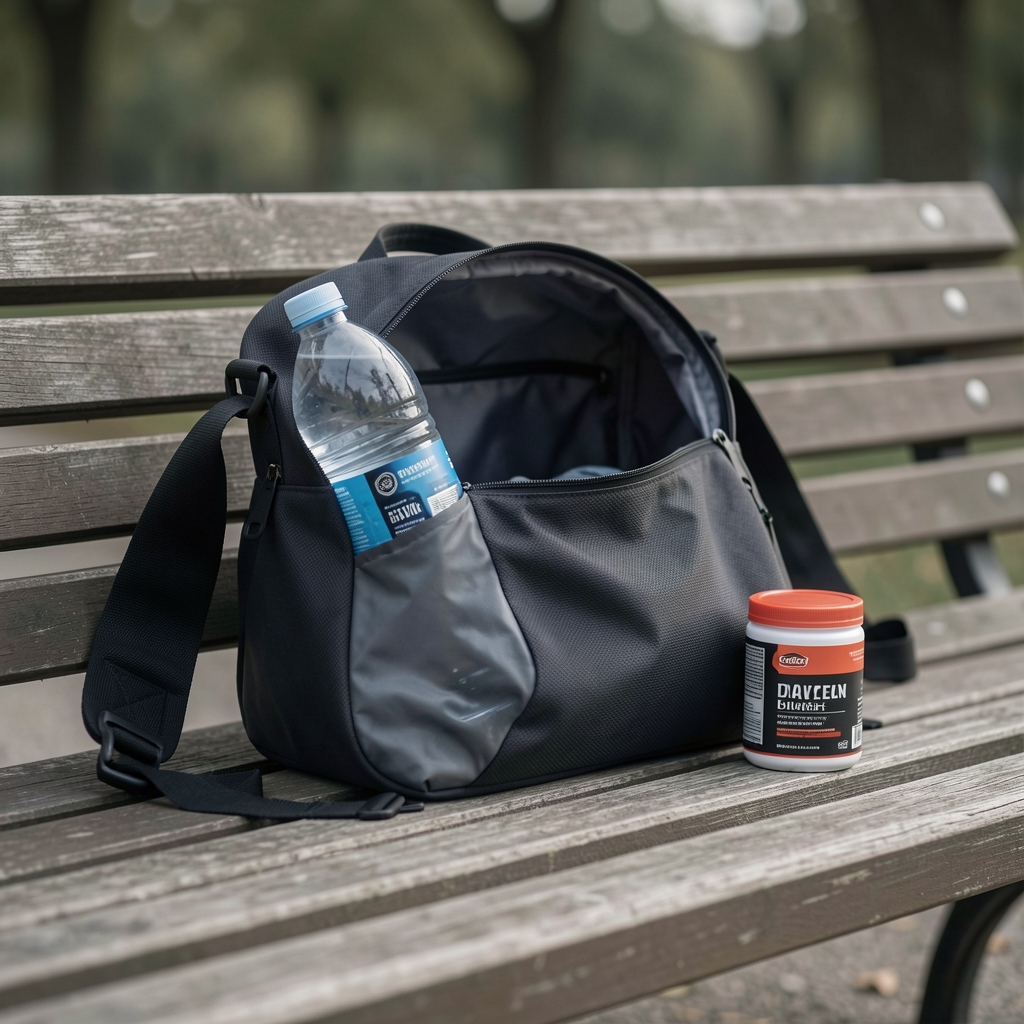
Creatine's interaction with the broader men's supplement stack is straightforward from an editorial standpoint: it does not interfere with the absorption or activity of the micronutrients most commonly stacked alongside it — vitamin D, omega-3, magnesium, zinc, and B vitamins. The practical placement of creatine in the morning routine, alongside these micronutrients, is consistent with the daily consistency emphasis and presents no documented concerns in the published nutritional literature.
The one pairing most frequently noted in the research is creatine and protein. The combination reflects the complementary positioning of the two supplements within the context of resistance training: creatine supporting physical output over time during training, protein supporting daily protein intake targets alongside whole food sources as part of recovery nutrition. The two are not strictly interdependent — each functions independently — but their co-occurrence in active men's supplement stacks reflects a coherent nutritional logic.
An editorial account of the creatine literature that addresses only positive findings would misrepresent the evidential landscape. Several claims that circulate in popular supplement discussion are not supported by the published research base, and an evidence-informed review requires noting them explicitly.
The research does not document creatine as effective for all activity types or all individuals. Response variability is documented — a proportion of individuals in study populations show minimal change in phosphocreatine storage levels with supplementation, a pattern sometimes described in the literature as non-response. The published research does not establish a reliable method for predicting non-response prior to supplementation. The practical implication is that an individual-level assessment of whether supplementation produces the expected effect requires a consistent supplementation period of sufficient duration, typically four to eight weeks at minimum.
The research also does not support the various exaggerated claims sometimes encountered in supplement marketing. Creatine supports physical output over time in resistance training routines — that is the documented finding. It does not produce instant strength gains, override the requirement for progressive training structure, or function independently of adequate dietary intake and recovery nutrition.
The creatine research literature, reviewed editorially rather than commercially, presents a relatively clear picture: a well-documented supplement with a specific mechanistic role, an extensive evidence base in resistance training contexts, and a straightforward daily supplementation protocol. It earns its place in the active man's daily stack on the basis of documented characteristics rather than marketing claims — a distinction that an evidence-informed publication finds worth making explicit.
Articles published on Areno Journal are editorial in nature and reflect the writers' observations on everyday supplementation habits and nutritional awareness for active men. The content is not intended as professional advice, nor as guidance for the management of any specific condition. Readers with specific concerns about their daily routines are encouraged to speak with a qualified wellness professional.

Marcus Webb is the founding editor of Areno Journal. His editorial work focuses on the intersection of daily nutritional habits and active lifestyle patterns, drawing on published nutritional research to document how men approach supplementation in practical, evidence-informed ways.
More from Marcus Webb